So I was at my men's group on Tuesday. We are currently reading and discussing Pope Benedict's Encylical, Spe Salvi. It has been very enriching to say the least. On this particular evening we read the following paragraphs (see below). I found it very interesting that our reading of these paragraphs happened to coincide with my blog discussion on Justice. The Pope's insight is something I would like to share as an addendum to my "Aribiter of Justice" post.
III. Judgement as a setting for learning and practising hope
41. At the conclusion of the central section of the Church's great Credo—the part that recounts the mystery of Christ, from his eternal birth of the Father and his temporal birth of the Virgin Mary, through his Cross and Resurrection to the second coming—we find the phrase: “he will come again in glory to judge the living and the dead”. From the earliest times, the prospect of the Judgement has influenced Christians in their daily living as a criterion by which to order their present life, as a summons to their conscience, and at the same time as hope in God's justice. Faith in Christ has never looked merely backwards or merely upwards, but always also forwards to the hour of justice that the Lord repeatedly proclaimed. This looking ahead has given Christianity its importance for the present moment. In the arrangement of Christian sacred buildings, which were intended to make visible the historic and cosmic breadth of faith in Christ, it became customary to depict the Lord returning as a king—the symbol of hope—at the east end; while the west wall normally portrayed the Last Judgement as a symbol of our responsibility for our lives—a scene which followed and accompanied the faithful as they went out to resume their daily routine. As the iconography of the Last Judgement developed, however, more and more prominence was given to its ominous and frightening aspects, which obviously held more fascination for artists than the splendour of hope, often all too well concealed beneath the horrors.
42. In the modern era, the idea of the Last Judgement has faded into the background: Christian faith has been individualized and primarily oriented towards the salvation of the believer's own soul, while reflection on world history is largely dominated by the idea of progress. The fundamental content of awaiting a final Judgement, however, has not disappeared: it has simply taken on a totally different form. The atheism of the nineteenth and twentieth centuries is—in its origins and aims—a type of moralism: a protest against the injustices of the world and of world history. A world marked by so much injustice, innocent suffering, and cynicism of power cannot be the work of a good God. A God with responsibility for such a world would not be a just God, much less a good God. It is for the sake of morality that this God has to be contested. Since there is no God to create justice, it seems man himself is now called to establish justice. If in the face of this world's suffering, protest against God is understandable, the claim that humanity can and must do what no God actually does or is able to do is both presumptuous and intrinsically false. It is no accident that this idea has led to the greatest forms of cruelty and violations of justice; rather, it is grounded in the intrinsic falsity of the claim. A world which has to create its own justice is a world without hope. No one and nothing can answer for centuries of suffering. No one and nothing can guarantee that the cynicism of power—whatever beguiling ideological mask it adopts—will cease to dominate the world. This is why the great thinkers of the Frankfurt School, Max Horkheimer and Theodor W. Adorno, were equally critical of atheism and theism. Horkheimer radically excluded the possibility of ever finding a this-worldly substitute for God, while at the same time he rejected the image of a good and just God. In an extreme radicalization of the Old Testament prohibition of images, he speaks of a “longing for the totally Other” that remains inaccessible—a cry of yearning directed at world history. Adorno also firmly upheld this total rejection of images, which naturally meant the exclusion of any “image” of a loving God. On the other hand, he also constantly emphasized this “negative” dialectic and asserted that justice —true justice—would require a world “where not only present suffering would be wiped out, but also that which is irrevocably past would be undone”[30]. This, would mean, however—to express it with positive and hence, for him, inadequate symbols—that there can be no justice without a resurrection of the dead. Yet this would have to involve “the resurrection of the flesh, something that is totally foreign to idealism and the realm of Absolute spirit”[31].
43. Christians likewise can and must constantly learn from the strict rejection of images that is contained in God's first commandment (cf. Ex 20:4). The truth of negative theology was highlighted by the Fourth Lateran Council, which explicitly stated that however great the similarity that may be established between Creator and creature, the dissimilarity between them is always greater[32]. In any case, for the believer the rejection of images cannot be carried so far that one ends up, as Horkheimer and Adorno would like, by saying “no” to both theses—theism and atheism. God has given himself an “image”: in Christ who was made man. In him who was crucified, the denial of false images of God is taken to an extreme. God now reveals his true face in the figure of the sufferer who shares man's God-forsaken condition by taking it upon himself. This innocent sufferer has attained the certitude of hope: there is a God, and God can create justice in a way that we cannot conceive, yet we can begin to grasp it through faith. Yes, there is a resurrection of the flesh[33]. There is justice[34]. There is an “undoing” of past suffering, a reparation that sets things aright. For this reason, faith in the Last Judgement is first and foremost hope—the need for which was made abundantly clear in the upheavals of recent centuries. I am convinced that the question of justice constitutes the essential argument, or in any case the strongest argument, in favour of faith in eternal life. The purely individual need for a fulfilment that is denied to us in this life, for an everlasting love that we await, is certainly an important motive for believing that man was made for eternity; but only in connection with the impossibility that the injustice of history should be the final word does the necessity for Christ's return and for new life become fully convincing.
44. To protest against God in the name of justice is not helpful. A world without God is a world without hope (cf. Eph 2:12). Only God can create justice. And faith gives us the certainty that he does so. The image of the Last Judgement is not primarily an image of terror, but an image of hope; for us it may even be the decisive image of hope. Is it not also a frightening image? I would say: it is an image that evokes responsibility, an image, therefore, of that fear of which Saint Hilary spoke when he said that all our fear has its place in love[35]. God is justice and creates justice. This is our consolation and our hope. And in his justice there is also grace. This we know by turning our gaze to the crucified and risen Christ. Both these things—justice and grace—must be seen in their correct inner relationship. Grace does not cancel out justice. It does not make wrong into right. It is not a sponge which wipes everything away, so that whatever someone has done on earth ends up being of equal value. Dostoevsky, for example, was right to protest against this kind of Heaven and this kind of grace in his novel The Brothers Karamazov. Evildoers, in the end, do not sit at table at the eternal banquet beside their victims without distinction, as though nothing had happened. Here I would like to quote a passage from Plato which expresses a premonition of just judgement that in many respects remains true and salutary for Christians too. Albeit using mythological images, he expresses the truth with an unambiguous clarity, saying that in the end souls will stand naked before the judge. It no longer matters what they once were in history, but only what they are in truth: “Often, when it is the king or some other monarch or potentate that he (the judge) has to deal with, he finds that there is no soundness in the soul whatever; he finds it scourged and scarred by the various acts of perjury and wrong-doing ...; it is twisted and warped by lies and vanity, and nothing is straight because truth has had no part in its development. Power, luxury, pride, and debauchery have left it so full of disproportion and ugliness that when he has inspected it (he) sends it straight to prison, where on its arrival it will undergo the appropriate punishment ... Sometimes, though, the eye of the judge lights on a different soul which has lived in purity and truth ... then he is struck with admiration and sends him to the isles of the blessed”[36]. In the parable of the rich man and Lazarus (cf. Lk 16:19-31), Jesus admonishes us through the image of a soul destroyed by arrogance and opulence, who has created an impassable chasm between himself and the poor man; the chasm of being trapped within material pleasures; the chasm of forgetting the other, of incapacity to love, which then becomes a burning and unquenchable thirst. We must note that in this parable Jesus is not referring to the final destiny after the Last Judgement, but is taking up a notion found, inter alia, in early Judaism, namely that of an intermediate state between death and resurrection, a state in which the final sentence is yet to be pronounced.
45. This early Jewish idea of an intermediate state includes the view that these souls are not simply in a sort of temporary custody but, as the parable of the rich man illustrates, are already being punished or are experiencing a provisional form of bliss. There is also the idea that this state can involve purification and healing which mature the soul for communion with God. The early Church took up these concepts, and in the Western Church they gradually developed into the doctrine of Purgatory. We do not need to examine here the complex historical paths of this development; it is enough to ask what it actually means. With death, our life-choice becomes definitive—our life stands before the judge. Our choice, which in the course of an entire life takes on a certain shape, can have a variety of forms. There can be people who have totally destroyed their desire for truth and readiness to love, people for whom everything has become a lie, people who have lived for hatred and have suppressed all love within themselves. This is a terrifying thought, but alarming profiles of this type can be seen in certain figures of our own history. In such people all would be beyond remedy and the destruction of good would be irrevocable: this is what we mean by the word Hell[37]. On the other hand there can be people who are utterly pure, completely permeated by God, and thus fully open to their neighbours—people for whom communion with God even now gives direction to their entire being and whose journey towards God only brings to fulfilment what they already are[38].
46. Yet we know from experience that neither case is normal in human life. For the great majority of people—we may suppose—there remains in the depths of their being an ultimate interior openness to truth, to love, to God. In the concrete choices of life, however, it is covered over by ever new compromises with evil—much filth covers purity, but the thirst for purity remains and it still constantly re-emerges from all that is base and remains present in the soul. What happens to such individuals when they appear before the Judge? Will all the impurity they have amassed through life suddenly cease to matter? What else might occur? Saint Paul, in his First Letter to the Corinthians, gives us an idea of the differing impact of God's judgement according to each person's particular circumstances. He does this using images which in some way try to express the invisible, without it being possible for us to conceptualize these images—simply because we can neither see into the world beyond death nor do we have any experience of it. Paul begins by saying that Christian life is built upon a common foundation: Jesus Christ. This foundation endures. If we have stood firm on this foundation and built our life upon it, we know that it cannot be taken away from us even in death. Then Paul continues: “Now if any one builds on the foundation with gold, silver, precious stones, wood, hay, straw—each man's work will become manifest; for the Day will disclose it, because it will be revealed with fire, and the fire will test what sort of work each one has done. If the work which any man has built on the foundation survives, he will receive a reward. If any man's work is burned up, he will suffer loss, though he himself will be saved, but only as through fire” (1 Cor 3:12-15). In this text, it is in any case evident that our salvation can take different forms, that some of what is built may be burned down, that in order to be saved we personally have to pass through “fire” so as to become fully open to receiving God and able to take our place at the table of the eternal marriage-feast.
47. Some recent theologians are of the opinion that the fire which both burns and saves is Christ himself, the Judge and Saviour. The encounter with him is the decisive act of judgement. Before his gaze all falsehood melts away. This encounter with him, as it burns us, transforms and frees us, allowing us to become truly ourselves. All that we build during our lives can prove to be mere straw, pure bluster, and it collapses. Yet in the pain of this encounter, when the impurity and sickness of our lives become evident to us, there lies salvation. His gaze, the touch of his heart heals us through an undeniably painful transformation “as through fire”. But it is a blessed pain, in which the holy power of his love sears through us like a flame, enabling us to become totally ourselves and thus totally of God. In this way the inter-relation between justice and grace also becomes clear: the way we live our lives is not immaterial, but our defilement does not stain us for ever if we have at least continued to reach out towards Christ, towards truth and towards love. Indeed, it has already been burned away through Christ's Passion. At the moment of judgement we experience and we absorb the overwhelming power of his love over all the evil in the world and in ourselves. The pain of love becomes our salvation and our joy. It is clear that we cannot calculate the “duration” of this transforming burning in terms of the chronological measurements of this world. The transforming “moment” of this encounter eludes earthly time-reckoning—it is the heart's time, it is the time of “passage” to communion with God in the Body of Christ[39]. The judgement of God is hope, both because it is justice and because it is grace. If it were merely grace, making all earthly things cease to matter, God would still owe us an answer to the question about justice—the crucial question that we ask of history and of God. If it were merely justice, in the end it could bring only fear to us all. The incarnation of God in Christ has so closely linked the two together—judgement and grace—that justice is firmly established: we all work out our salvation “with fear and trembling” (Phil 2:12). Nevertheless grace allows us all to hope, and to go trustfully to meet the Judge whom we know as our “advocate”, or parakletos (cf. 1 Jn 2:1).
48. A further point must be mentioned here, because it is important for the practice of Christian hope. Early Jewish thought includes the idea that one can help the deceased in their intermediate state through prayer (see for example 2 Macc 12:38-45; first century BC). The equivalent practice was readily adopted by Christians and is common to the Eastern and Western Church. The East does not recognize the purifying and expiatory suffering of souls in the afterlife, but it does acknowledge various levels of beatitude and of suffering in the intermediate state. The souls of the departed can, however, receive “solace and refreshment” through the Eucharist, prayer and almsgiving. The belief that love can reach into the afterlife, that reciprocal giving and receiving is possible, in which our affection for one another continues beyond the limits of death—this has been a fundamental conviction of Christianity throughout the ages and it remains a source of comfort today. Who would not feel the need to convey to their departed loved ones a sign of kindness, a gesture of gratitude or even a request for pardon? Now a further question arises: if “Purgatory” is simply purification through fire in the encounter with the Lord, Judge and Saviour, how can a third person intervene, even if he or she is particularly close to the other? When we ask such a question, we should recall that no man is an island, entire of itself. Our lives are involved with one another, through innumerable interactions they are linked together. No one lives alone. No one sins alone. No one is saved alone. The lives of others continually spill over into mine: in what I think, say, do and achieve. And conversely, my life spills over into that of others: for better and for worse. So my prayer for another is not something extraneous to that person, something external, not even after death. In the interconnectedness of Being, my gratitude to the other—my prayer for him—can play a small part in his purification. And for that there is no need to convert earthly time into God's time: in the communion of souls simple terrestrial time is superseded. It is never too late to touch the heart of another, nor is it ever in vain. In this way we further clarify an important element of the Christian concept of hope. Our hope is always essentially also hope for others; only thus is it truly hope for me too[40]. As Christians we should never limit ourselves to asking: how can I save myself? We should also ask: what can I do in order that others may be saved and that for them too the star of hope may rise? Then I will have done my utmost for my own personal salvation as well.
[30] Negative Dialektik (1966), Third part, III, 11, in Gesammelte Schriften VI, Frankfurt am Main 1973, p.395.
[31] Ibid., Second part, p.207.
[32] DS 806.
[33] Cf. Catechism of the Catholic Church, 988-1004.
[34] Cf. ibid., 1040.
[35] Cf. Tractatus super Psalmos, Ps 127, 1-3: CSEL 22, 628-630.
[36] Gorgias 525a-526c.
[37] Cf. Catechism of the Catholic Church, 1033-1037.
[38] Cf. ibid., 1023-1029.
[39] Cf. Catechism of the Catholic Church, 1030-1032.
[40] Cf. Catechism of the Catholic Church, 1032.
Showing posts with label Faith Thoughts. Show all posts
Showing posts with label Faith Thoughts. Show all posts
9/18/2008

9/13/2008
Papal Thought
Here is a post with some links to various Papal Encyclicals regarding pressing issues of the day. I will post them by their english title. The official titles are of course in Latin. Some of them are a little difficult to read, and some are not. Some are truly humbling (at least for me) when you realize the depth of thought that exists outside your own. All are very enlightening.
Rights and Duties of Capital and Labor the landmark teaching from Pope Leo XIII regarding workers and industry in the new world economy emerging in the 19th Century.
Human Life The prophetic teaching and explanation of proper Christian thought on contraception. Pope Paul VI
Gospel of Life John Paul II's remarkable letter expanding on Paul VI's encyclical. Really the seminole teaching on the value of all human life.
Faith and Reason John Paul II showing how faith and reason are not in opposition to each other, but compliment each other. It was sure nice having a world class philosopher as Pope.
Centissimus Annus JP II expanding on Rerum Novarum on it's 100th anniversary.
Saved Though Hope Benedict XVI, an explanation of what is hope. Very interesting in how it shows that placing hope in "salvation" though science and civil government is false. An absolute must read, especially in these days of Barack Obama and his whole HOPE slogan. After reading this encyclical, you will be better able to explain why Obama makes you ill. Also, it illuminates what is so stupid about liberals wanting to be called "progressives" as if it is flattering.
Rights and Duties of Capital and Labor the landmark teaching from Pope Leo XIII regarding workers and industry in the new world economy emerging in the 19th Century.
Human Life The prophetic teaching and explanation of proper Christian thought on contraception. Pope Paul VI
Gospel of Life John Paul II's remarkable letter expanding on Paul VI's encyclical. Really the seminole teaching on the value of all human life.
Faith and Reason John Paul II showing how faith and reason are not in opposition to each other, but compliment each other. It was sure nice having a world class philosopher as Pope.
Centissimus Annus JP II expanding on Rerum Novarum on it's 100th anniversary.
Saved Though Hope Benedict XVI, an explanation of what is hope. Very interesting in how it shows that placing hope in "salvation" though science and civil government is false. An absolute must read, especially in these days of Barack Obama and his whole HOPE slogan. After reading this encyclical, you will be better able to explain why Obama makes you ill. Also, it illuminates what is so stupid about liberals wanting to be called "progressives" as if it is flattering.
7/22/2008
Christian Worship vs Christotaintment
I read this story and found it to be rather silly. One of the things that I remember from my sojourn through various Protestant (Evangelical, Main-Line, Fundamentalist) churches was that they focused on the entertainment aspect of the Sunday worship service. Mostly the "Evangelical" and "Fundamentalist" communities, but also the Main-Line (Protestant Churches more than 100 years old) churches to a lesser degree. Contemporary music is a very important aspect of this entertainment. Often times I even found it to be the focus of the service.


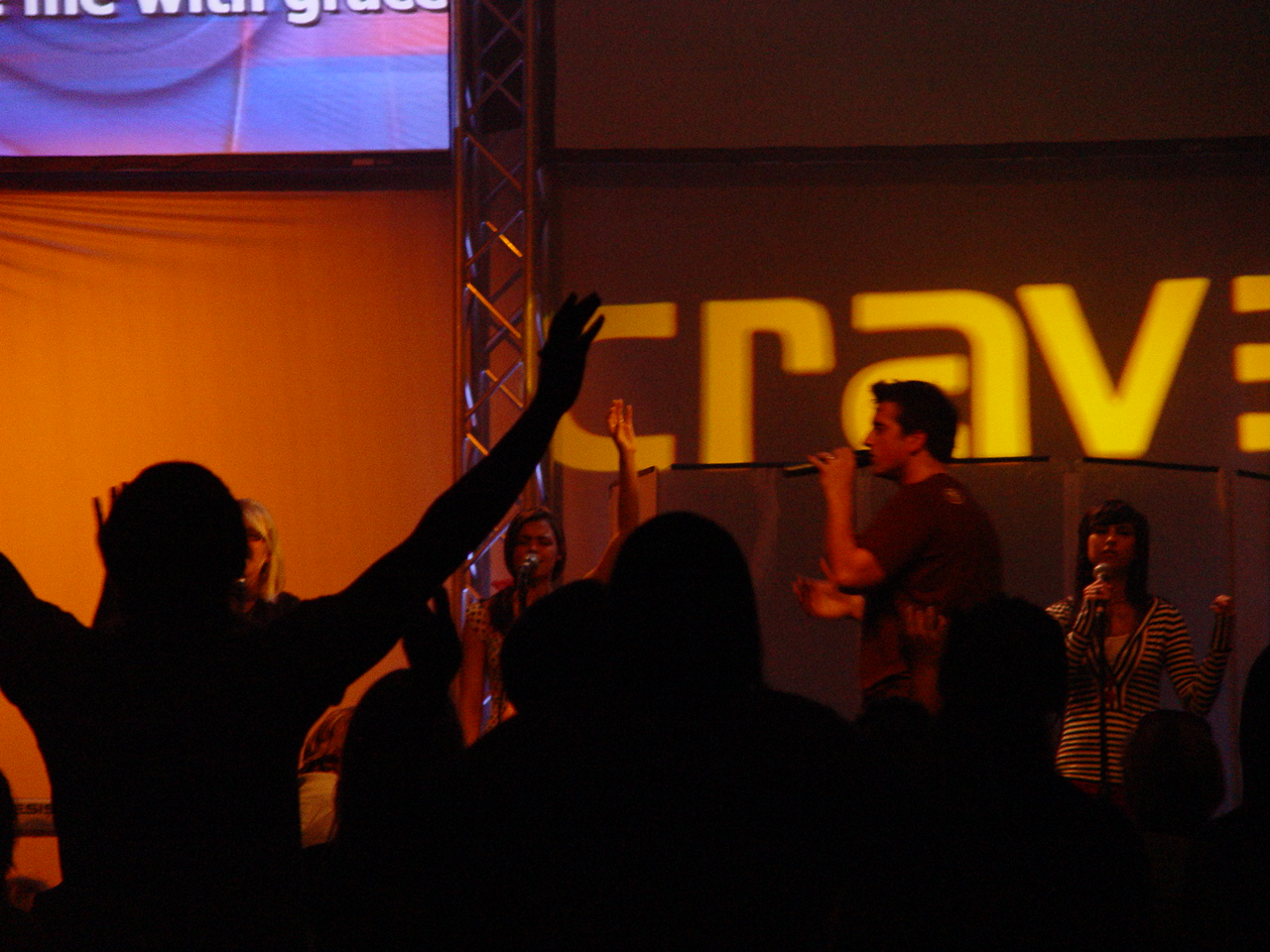
Plays and skits were also frequent tools used during the service. Again the focus was on entertaining the people present, while delivering a message.

I think that these type of low, irreverant forms of church services have led to a general lack of "awe", respect, and "fear of the Lord" in American Christianity. What else could account for a T-Shirt line like this...

Now back to the pastor who wrecked his motorcycle in church and broke his wrist. He was going to use the motorcycle to show how we must become one with Christ. I suppose by showing that when you sit on a motorcyle to ride it, you become part of the bike. Whatever, I see the analogy and I think that it could be an effective, albeit silly, way of explaining we must unite ourselves with Christ.
These innovative ways of conducting a church service become necessary when a community is cut off from the Traditions/traditions of Christ's Church. And when a community is cut of from authentic tradition, it necessarily creates it's own traditions. Christ himself prayed for us to have unity (John 17: 20-26), and he put the structure in place for us to be united. Through the hands of the priest, we receive the great gift of the Eucharist. Through this Eucharist, we are able to be united with Christ, his Church, and each other. As St. Paul said in Ephesians; "There is one body and one Spirit, just as you were called to the one hope that belongs to your call, one Lord, one faith, one baptism, one God and Father of us all, who is above all and through all and in all."
Now, the Catholic Church has it's own problems with innovation of the liturgy
The problem with all of these "Christotainment" versions of worship service is this. It makes man the focus of our worship. It makes man the focus of the liturgy. It makes worship and praise horizontal and not vertical.
7/17/2008
MLS Soccer player to Catholic Priesthood
I came across this news story and thought I would share it.
You often hear that there is a shortage of vocations to the priesthood. I don't think so however. I think there is a lack of answering the call to a vocation as a priest. Why is there this lack of answering the call? I think there are several reasons, I will give one here.
Parents don't embrace or promote the priesthood for their sons. This is done both directly and indirectly. A subtle way that this lack of support for a vocation to the priesthood is exhibited is in the way parents talk with their children and others about their children's future. Here is an example of a typical conversation between parents and their son.
Mother: "Johnny, when you grow up and have a family of your own, then you'll have the same rules for you your kids"
or
Dad: "Andrew, you need to go to college so that you can have a good job to be able to support your wife and children"
I've heard it thousands of times. There is an underlying assumption that a sons vocation is to the married life. It pervades a persons speech. It generates assumptive language when discussing the future of their children. It isn't a direct hinderance to following a call to the priesthood. But it creates a manner of thinking about the future that excludes the priesthood for young men. This in turn causes young men to reject those thoughts about being a priest when they begin to appear in their conscience because, the only normal thing in all their discussions with family is being a husband and dad.
Whenever I talk with my son, I consciously make a point of including the priesthood as a possible part of his future. Here is an example of my coversation with my son.
ME: "When you grow up and have a parish of people who depend on you, or a wife and kids that depend on you, you'll be glad that I tought you that a person needs to do their chores everyday."
Me: "It's important to learn how to talk with people and to learn how to listen to people because if you have a wife and kids, you need to be able to do those things. And if you are a priest, you have to be able to give people really good advice during confessions or spiritual direction."
I think if people would just make that subtle contextual change in their speech, there would be a dramatic increase in young men following their call to a vocation to the priesthood.
You often hear that there is a shortage of vocations to the priesthood. I don't think so however. I think there is a lack of answering the call to a vocation as a priest. Why is there this lack of answering the call? I think there are several reasons, I will give one here.
Parents don't embrace or promote the priesthood for their sons. This is done both directly and indirectly. A subtle way that this lack of support for a vocation to the priesthood is exhibited is in the way parents talk with their children and others about their children's future. Here is an example of a typical conversation between parents and their son.
Mother: "Johnny, when you grow up and have a family of your own, then you'll have the same rules for you your kids"
or
Dad: "Andrew, you need to go to college so that you can have a good job to be able to support your wife and children"
I've heard it thousands of times. There is an underlying assumption that a sons vocation is to the married life. It pervades a persons speech. It generates assumptive language when discussing the future of their children. It isn't a direct hinderance to following a call to the priesthood. But it creates a manner of thinking about the future that excludes the priesthood for young men. This in turn causes young men to reject those thoughts about being a priest when they begin to appear in their conscience because, the only normal thing in all their discussions with family is being a husband and dad.
Whenever I talk with my son, I consciously make a point of including the priesthood as a possible part of his future. Here is an example of my coversation with my son.
ME: "When you grow up and have a parish of people who depend on you, or a wife and kids that depend on you, you'll be glad that I tought you that a person needs to do their chores everyday."
Me: "It's important to learn how to talk with people and to learn how to listen to people because if you have a wife and kids, you need to be able to do those things. And if you are a priest, you have to be able to give people really good advice during confessions or spiritual direction."
I think if people would just make that subtle contextual change in their speech, there would be a dramatic increase in young men following their call to a vocation to the priesthood.
7/02/2008
Done with my break
Well, I just took an eight month break from blogging.
One big thing on my mind is a big change at my Parish. Fr. Freitag, Our pastor of 9 years, was transferred to another parish in the Archdiocese midway through his second term as our pastor. This was to fill a vacancy left at the other parish. His last week with us was at the end of June.
It is a difficult time for myself and my family because the departing pastor was the priest who helped me find my way back to the Catholic Church. His straightforward manner of presenting Catholic beliefs and practices were exactly what my wife (an evangelical Protestant) had been thirsting for since we met. She converted to the Catholic Church along with my oldest daughter, about 9 months after I returned.
I can't help but wonder how things would be different with the Catholic Church in the United States if all the bishops, priests, religious, and Catholic educators would simply present the faith without watering it down to make it more "palatable" or "friendly". It seems as if there exists a great hesitency in being straighforward about the faith. I think it's derived from a false sense of ecumanism, from being so worried about offending or challenging a persons ideas, beliefs, or conscience that people, (cradle Catholics, Protestants, and others) are left with an ignorance regarding what the Catholic Church actually teaches.
To highlight just two of the things my wife learned:
1: Jesus established a Church that was/is both visible and corporate, and entrusted the leadership of that Church with the Apostles. The Apostle Simon was specially called and placed by Christ as the leader of the Apostles and the Church. Simon's name was changed by Jesus to Cephas (Aramaic for rock). This showed that he was blessed and specially annointed by God for his new lifes role (the leader of the Church). No where in scripture does God change someones name without it being a blessing. A name change always indicates a calling, and defines a role that the individual will fill.
Abram to Abraham
Sarai to Sarah
Jacob to Israel
Hosea to Joshua
Simon to Cephas (Peter)
2: The Eucharist IS the body, blood, soul, and divinity of Christ. It isn't a symbol, it isn't somehow both bread & wine and body & blood (as it is for those who want it both ways) the substance of the bread and wine are completely transformed into the substance of Christ. This can only be believed through faith, because our physical senses fail us in discovering this truth. We are called to "...eat the flesh and drink the blood..." of Christ in order to have His life in us.
One big thing on my mind is a big change at my Parish. Fr. Freitag, Our pastor of 9 years, was transferred to another parish in the Archdiocese midway through his second term as our pastor. This was to fill a vacancy left at the other parish. His last week with us was at the end of June.
It is a difficult time for myself and my family because the departing pastor was the priest who helped me find my way back to the Catholic Church. His straightforward manner of presenting Catholic beliefs and practices were exactly what my wife (an evangelical Protestant) had been thirsting for since we met. She converted to the Catholic Church along with my oldest daughter, about 9 months after I returned.
I can't help but wonder how things would be different with the Catholic Church in the United States if all the bishops, priests, religious, and Catholic educators would simply present the faith without watering it down to make it more "palatable" or "friendly". It seems as if there exists a great hesitency in being straighforward about the faith. I think it's derived from a false sense of ecumanism, from being so worried about offending or challenging a persons ideas, beliefs, or conscience that people, (cradle Catholics, Protestants, and others) are left with an ignorance regarding what the Catholic Church actually teaches.
To highlight just two of the things my wife learned:
1: Jesus established a Church that was/is both visible and corporate, and entrusted the leadership of that Church with the Apostles. The Apostle Simon was specially called and placed by Christ as the leader of the Apostles and the Church. Simon's name was changed by Jesus to Cephas (Aramaic for rock). This showed that he was blessed and specially annointed by God for his new lifes role (the leader of the Church). No where in scripture does God change someones name without it being a blessing. A name change always indicates a calling, and defines a role that the individual will fill.
Abram to Abraham
Sarai to Sarah
Jacob to Israel
Hosea to Joshua
Simon to Cephas (Peter)
2: The Eucharist IS the body, blood, soul, and divinity of Christ. It isn't a symbol, it isn't somehow both bread & wine and body & blood (as it is for those who want it both ways) the substance of the bread and wine are completely transformed into the substance of Christ. This can only be believed through faith, because our physical senses fail us in discovering this truth. We are called to "...eat the flesh and drink the blood..." of Christ in order to have His life in us.
Those are only two of the numerous things that my wife had illuminated for her through Fr. Freitag and his RCIA program. Fr. Freitag ensured that everything taught was from, or derived from, the Catechism of the Catholic Church, or from Magesterial documents. My wife originally went to the RCIA classes simply to learn what it was that I believed. She didn't feel compelled to convert until about 6 weeks in to the class. This desire to convert came through the conviction of the Holy Spirit after having heard the truth of the Gospel in a faithful RCIA program. If only all RCIA programs told the truth without addition or subtraction based on some persons personal agenda and ulterior motives.
Thank God for good and holy priests such a Fr. Patrick Freitag. We wish him well at his new assignment with St. Monica's Parish on Mercer Island.
5/18/2007
A story that bears watching
I have been following a conversion story through alternative information media (AIM) on the internet for the past few weeks. Dr. Francis Beckwith, the president of the Evangelical Theological Society (ETS), converted and entered into full communion in the Catholic Church. There have been some understandable, yet unfortunate, uncharitable dissertations regarding Dr. Beckwith since his announcement. These were done by well intentioned Evangelicals who were probably offended and felt betrayed by Dr. Beckwith's conversion, which to them is incomprehensible. Some were also done by gloating Catholics who were uncharitably reveling in triumphalism. However, there have also been many charitable expressions regarding his conversion from evangelicals and Catholics alike.
There is a letter in the Wall Street Journal from a former collegue in the ETS that provides a fine example of charity. Also, the ETS released a statement regarding the situation that calmly expresses their thoughts without being uncharitable. The Wall Street Journal letter points to the fact that there have been a growing number of high profile conversions by people from the evangelical tradition to Catholicism since the mid 1960's. This is possibly due to the emphasis on ecumanism promulgated by the Second Vatican Council.
Converting from one Christian tradition to another is a two way street. The process of converting and the impetus behind them differ dramatically in my opinion. From what I have witnessed, Catholics who convert to newer traditions of Christian expression (e.g Calvanism, Lutheranism, Pentacostalism, Evangelicalism) do so out of ignorance born from an indifferentism towards their spiritual life prior to their conversion. Practicing the faith and living a committed spiritual life in Christ was not an important or consistent part of their family life. Because of this, they never learned the reasons, facts, and explanations for Catholic theological beliefs. They did however learn many basic core Christian beliefs; e.g. the existence of God as a Trinity, the death and resurrection of Jesus, the inspiration and truth of Sacred Scripture. When these Catholics then begin to desire to become serious in the spiritual life, they are very often susceptable to being influenced by co-workers, friends, and romantic interests who grew up practicing a Christian faith expression in a Protestant tradition. Many of the things they are told by these people sound very familiar to them because of their Catholic upbringing. The theological conclusions end up being different because of the Protestant tradition of personal infallibility in Biblical interpretation and exegesis. These fallen away Catholics end up embracing doctrines such as; Sola Fide, Sola Scriptura, symbolic Communion, symbolic Baptism, total depravity. They also end up learning erroneous "facts" regarding the Catholic faith.
The Protestant converts to the Catholic Church are very much the opposite. They come from a wide variety of Christian Traditions, (e.g. Lutheran, Prysbeterian, Assembly of God, Baptist.) And they convert though they were very knowledgable of what their tradition taught. Their impetus is usually that they honestly read Scripture with a desire to closely follow Scripture and understand the Christian faith as it was passed on by Jesus to the Apostles, and from the Apostles to the Church Fathers, and so on... and they discovered that the Catholic Church is indeed the Church that Christ founded.
Summary: Most Catholics who convert to Protestantism were very ignorant of what the Catholic Church actually professes. They then fill in this ignorance with erroneous beliefs regarding the Catholic Church and they embrace false theological beliefs born of the Protestant tradition. Most Protestants who convert to the Catholic Church were very knowledgable of what their church professed. They were however honest enough to look at all traditions of Christianity with a critical eye. And being docile to the Holy Spirit, they were able to embrace the Catholic Church with the knowledge that within it subsists the fullness of God's revelation.
I am an example of both; going from lax indifferent Catholicism, to becoming a committed Protestant; (jumping between several non-denominational/evangelical traditions, Methodistism, and Lutheranism), and finally returning to the Catholic Church after honestly and vigorously studying Scripture, theology, and Chistian history.
Pyro
There is a letter in the Wall Street Journal from a former collegue in the ETS that provides a fine example of charity. Also, the ETS released a statement regarding the situation that calmly expresses their thoughts without being uncharitable. The Wall Street Journal letter points to the fact that there have been a growing number of high profile conversions by people from the evangelical tradition to Catholicism since the mid 1960's. This is possibly due to the emphasis on ecumanism promulgated by the Second Vatican Council.
Converting from one Christian tradition to another is a two way street. The process of converting and the impetus behind them differ dramatically in my opinion. From what I have witnessed, Catholics who convert to newer traditions of Christian expression (e.g Calvanism, Lutheranism, Pentacostalism, Evangelicalism) do so out of ignorance born from an indifferentism towards their spiritual life prior to their conversion. Practicing the faith and living a committed spiritual life in Christ was not an important or consistent part of their family life. Because of this, they never learned the reasons, facts, and explanations for Catholic theological beliefs. They did however learn many basic core Christian beliefs; e.g. the existence of God as a Trinity, the death and resurrection of Jesus, the inspiration and truth of Sacred Scripture. When these Catholics then begin to desire to become serious in the spiritual life, they are very often susceptable to being influenced by co-workers, friends, and romantic interests who grew up practicing a Christian faith expression in a Protestant tradition. Many of the things they are told by these people sound very familiar to them because of their Catholic upbringing. The theological conclusions end up being different because of the Protestant tradition of personal infallibility in Biblical interpretation and exegesis. These fallen away Catholics end up embracing doctrines such as; Sola Fide, Sola Scriptura, symbolic Communion, symbolic Baptism, total depravity. They also end up learning erroneous "facts" regarding the Catholic faith.
The Protestant converts to the Catholic Church are very much the opposite. They come from a wide variety of Christian Traditions, (e.g. Lutheran, Prysbeterian, Assembly of God, Baptist.) And they convert though they were very knowledgable of what their tradition taught. Their impetus is usually that they honestly read Scripture with a desire to closely follow Scripture and understand the Christian faith as it was passed on by Jesus to the Apostles, and from the Apostles to the Church Fathers, and so on... and they discovered that the Catholic Church is indeed the Church that Christ founded.
Summary: Most Catholics who convert to Protestantism were very ignorant of what the Catholic Church actually professes. They then fill in this ignorance with erroneous beliefs regarding the Catholic Church and they embrace false theological beliefs born of the Protestant tradition. Most Protestants who convert to the Catholic Church were very knowledgable of what their church professed. They were however honest enough to look at all traditions of Christianity with a critical eye. And being docile to the Holy Spirit, they were able to embrace the Catholic Church with the knowledge that within it subsists the fullness of God's revelation.
I am an example of both; going from lax indifferent Catholicism, to becoming a committed Protestant; (jumping between several non-denominational/evangelical traditions, Methodistism, and Lutheranism), and finally returning to the Catholic Church after honestly and vigorously studying Scripture, theology, and Chistian history.
Pyro
2/24/2007
Lenten Reflection
So... I'm part of a group that is keeping a 40 day vigil during Lent on the sidewalk at a Planned Parenthood site. The vigil hours are from 8:00 AM till 8:00 PM. We had the typical responses from passing motorists which consist of; 5 honks and thumbs up for every 1 honk and middle finger/cursing. We even had a guy come up and give us all coffee and hot chocolate. My hour just happened to end at the same time that the Parish about 3 blocks away began Confessions. There was a nice handout that the priest gave that I will share with you here on my blog. Not sure where the reflection comes from, so I just want to give credit to whoever the unnamed source was.
Whatever Lenten practices we undertake, it is important to remember their purpose. Lenten practices are not about losing weight or finaly stopping smoking, but they are about deepening our baptismal identity as children of God and members of the Body of Christ. "If you are [children] of God"... this is the identity conferred upon us at baptism. This is the identity out of which we enter into our own Lenten desert. This is the identity out of which we face our own worst temptations. By rmaining faithful to who we are -- God's children, members of the Body of Christ -- we can resist temptations and grow in our relationships with God, self, and others.
Traditionally, Christian penance has always included three prongs: fasting, prayer, and almsgiving (charity). This suggests to us that penance isn't a matter of "giving up" something, nor is it a single act -- even if performed faithfully over a long period like forty days. Christian penance has as it's purpose genuine conversion of life, so that at the end of Lent when we renew our baptismal promises we are able to do so with full throat, well aware of our own wonderful identity as sons and daughters of God. The new life we celebrate at Easter cannot happen without our dying to ourselves, without our going to Jerusalem with Jesus and willingly embracing whatever death is in store for us. For that is the road to new life. That is the road we travel during Lent.
Have a blessed Lent
Pyro
Whatever Lenten practices we undertake, it is important to remember their purpose. Lenten practices are not about losing weight or finaly stopping smoking, but they are about deepening our baptismal identity as children of God and members of the Body of Christ. "If you are [children] of God"... this is the identity conferred upon us at baptism. This is the identity out of which we enter into our own Lenten desert. This is the identity out of which we face our own worst temptations. By rmaining faithful to who we are -- God's children, members of the Body of Christ -- we can resist temptations and grow in our relationships with God, self, and others.
Traditionally, Christian penance has always included three prongs: fasting, prayer, and almsgiving (charity). This suggests to us that penance isn't a matter of "giving up" something, nor is it a single act -- even if performed faithfully over a long period like forty days. Christian penance has as it's purpose genuine conversion of life, so that at the end of Lent when we renew our baptismal promises we are able to do so with full throat, well aware of our own wonderful identity as sons and daughters of God. The new life we celebrate at Easter cannot happen without our dying to ourselves, without our going to Jerusalem with Jesus and willingly embracing whatever death is in store for us. For that is the road to new life. That is the road we travel during Lent.
Have a blessed Lent
Pyro

8/29/2006
Back in School!!!!!!
Kids are back in School. Funny thing is, they were telling me last week how they were done with Summer! I don't know if that's because Summer was terrible or because it was so good that they were all rested up. I think they really just missed their friends and were ready to get back to work.
Thankfully my kids' school is headed by a pastor who is attentive to the Catholicity of their education. There is a Mass every Friday and get this, the Mass is celebrated with fidelity to the authentic liturgy of the Church. The pastor focuses his homily on the kids and their issues but, he doesn't dumb down the liturgy or invent his own "Children's Mass" to make Church more "entertaining" for the kids. I had a similar experience when my kids went to a Missouri Synod Lutheran school. The pastor there had a church service every Wednesday for the school kids. It was done with almost identical similarity to the regular Sunday worship service. The sermon was geared at the kid level but the other stuff wasn't "dumbed down". I think lots of Christian communities sell kids short. Or maybe there is an over commercialization of "church". In order to compete in the free enterprise church environment you have to excite your customers and give them something unique. I think having a "kids service" that uses the "entertainment value" concept to make kids interested does much harm in the long run. It focuses the service on the individual instead of on God. The adjective "service" begins to modify the mortal subjects as opposed to the Divine Person. Then, when the kids are adults and out looking for their own church, they instinctively look for a community that entertains them. Maybe not on the conscious level, but it certainly happens. And it happens in both the Catholic and Protestant worlds.
Anyway, (How'd I get off on that tangent) My kids are happy to back in school. I'm happy they're back in school. My wife's happy they're back in school. Everyone's happy!! Now I have the computer and X-BOX to myself!!!!!! I mean,.... Now my wife and I can spend more quality time together.
Just wait till next week after the first test...
Thankfully my kids' school is headed by a pastor who is attentive to the Catholicity of their education. There is a Mass every Friday and get this, the Mass is celebrated with fidelity to the authentic liturgy of the Church. The pastor focuses his homily on the kids and their issues but, he doesn't dumb down the liturgy or invent his own "Children's Mass" to make Church more "entertaining" for the kids. I had a similar experience when my kids went to a Missouri Synod Lutheran school. The pastor there had a church service every Wednesday for the school kids. It was done with almost identical similarity to the regular Sunday worship service. The sermon was geared at the kid level but the other stuff wasn't "dumbed down". I think lots of Christian communities sell kids short. Or maybe there is an over commercialization of "church". In order to compete in the free enterprise church environment you have to excite your customers and give them something unique. I think having a "kids service" that uses the "entertainment value" concept to make kids interested does much harm in the long run. It focuses the service on the individual instead of on God. The adjective "service" begins to modify the mortal subjects as opposed to the Divine Person. Then, when the kids are adults and out looking for their own church, they instinctively look for a community that entertains them. Maybe not on the conscious level, but it certainly happens. And it happens in both the Catholic and Protestant worlds.
Anyway, (How'd I get off on that tangent) My kids are happy to back in school. I'm happy they're back in school. My wife's happy they're back in school. Everyone's happy!! Now I have the computer and X-BOX to myself!!!!!! I mean,.... Now my wife and I can spend more quality time together.
Just wait till next week after the first test...
8/17/2006
Respond or Not II
Well, I have lost the pamphlet so perhaps my course of action has been decided for me. It's just as well, I've had discussions with fundamentalist Christians before and they just aren't very reasonable. Their knowledge of Scripture and Christian history is also very limited. To paint them with a wide brush, they proclaim that Scripture is literal and the truths of Scripture are plainly evident for a person who reads it with a sincere desire to understand the truth. The problem is, they don't adhere to their own belief when it contradicts their tradition. As I said however, I'm generalizing and lumping a group of people together and all are not exactly the same. There are exceptions to the generalized observations that follow but, they are just exceptions and not the rule. One of the differences between Catholic Christians and Fundamentalist Christians is in how they view eachother.
Fundamentalists view the Catholic Church as a non Christian cult that practices necromancy, sorcery, and the worship of false gods. Catholics are not Christian and are therefore condemned to hell. They are in need of salvation and are targeted for conversion. The Catholic Church is an enemy of the Gospel because of her perversion of the Gospel message. The reluctance or failure of Catholics to leave the Church after a fundamentalist presents the Gospel to them is only evidence of the power of the Catholic cult. When that rare Catholic is found who can explain Catholic teaching with logic and reason while using Scripture, it only reinforces how powerful and twisted the Church is and how much control she has over her members. These are all things I have experienced first hand in discussions with fundamentalists.
Catholics view fundamentalists in a different light. As fundamentalism is a new tradition (only about 150-200 years old), that has no central authority, there is not one single view of them. As with all Christian churches that profess the Trinity and Baptize in the Name of the Father, Son, and Holy Spirit, fundamentalists are considered to be part of the Catholic Church. Being imperfectly united with the Church, there are certain obstacles in their realationship with God and His grace. Just as there are obstacles for Catholics who are within the visible Church yet through ignorance or obstinance, deny thruths of the faith.
The irony I find here is in the dogmatic judgement of the two traditions. The Church is accused of being controlling and rigid, supposedly denying the necessity of having a personal relationship with Jesus while teaching a salvation by works theology. Yet this controlling and rigid Church recognizes the Christianity and membership of the fundamentalists in the Body of Christ while the opposite doesn't hold true.
An example of how fundamentalists aren't faithful to their own theological beliefs and Scriptural exegesis is in their view of creation as compared to their view of communion. Remember that fundamentalists profess that Scripture is to be interpreted literally.
Fundamentalists hold that God created everything in six literal 24 hour days with one 24 hour day of rest around 6,000 years ago, give or take a thousand years or so. This view is maintained in the face of enormous scientific (anthropological, archeological, astrological, and geological) evidence that points to a different time frame. Fundamentalists arrive at this belief because they interpret the creation story in Genesis very literally. The literal interpretation of Scripture trumps all physical evidence.
Fundamentalists hold that the bread and wine used in communion, or the celebration of the Lords Supper, are just bread and wine and are only symbols of Jesus' Body and Blood. (NOTE: they don't use wine because in their tradition consuming alcohol is a sin. Therefore, even though Scripture refers to wine being consumed by Jesus at the last supper, it was really just non alcoholic grape juice despite what is literally written). They hold this symbolic belief despite the very literal words ("...this is my body...") of Jesus regarding the bread and wine used at the passover meal that was the Last Supper. And despite the very literal words of Jesus during the Bread of Life discourse (John 6). Their justification for not following the literal words of Scripture? Because the enormous physical (scientific) evidence that the bread and wine continue to have the appearance of bread and wine. What happened to the literal interpretion of Scripture?
I've had this discussion with fundamentalist friends. They get very agitated and do everything possible to keep from having to justify their position. They try to change the subject to something they have a couple of memorized "proof texts" for, like... how us Catholics worship Mary, or how we are wrong to believe in justification by "works" and not faith. When you explain the actual teaching of those things they believe you are trying to trick them and that you aren't telling the truth about what the Church teaches. They don't acknowledge that they must have been misinformed about what the Catholic Church professes.
Fundamentalists view the Catholic Church as a non Christian cult that practices necromancy, sorcery, and the worship of false gods. Catholics are not Christian and are therefore condemned to hell. They are in need of salvation and are targeted for conversion. The Catholic Church is an enemy of the Gospel because of her perversion of the Gospel message. The reluctance or failure of Catholics to leave the Church after a fundamentalist presents the Gospel to them is only evidence of the power of the Catholic cult. When that rare Catholic is found who can explain Catholic teaching with logic and reason while using Scripture, it only reinforces how powerful and twisted the Church is and how much control she has over her members. These are all things I have experienced first hand in discussions with fundamentalists.
Catholics view fundamentalists in a different light. As fundamentalism is a new tradition (only about 150-200 years old), that has no central authority, there is not one single view of them. As with all Christian churches that profess the Trinity and Baptize in the Name of the Father, Son, and Holy Spirit, fundamentalists are considered to be part of the Catholic Church. Being imperfectly united with the Church, there are certain obstacles in their realationship with God and His grace. Just as there are obstacles for Catholics who are within the visible Church yet through ignorance or obstinance, deny thruths of the faith.
The irony I find here is in the dogmatic judgement of the two traditions. The Church is accused of being controlling and rigid, supposedly denying the necessity of having a personal relationship with Jesus while teaching a salvation by works theology. Yet this controlling and rigid Church recognizes the Christianity and membership of the fundamentalists in the Body of Christ while the opposite doesn't hold true.
An example of how fundamentalists aren't faithful to their own theological beliefs and Scriptural exegesis is in their view of creation as compared to their view of communion. Remember that fundamentalists profess that Scripture is to be interpreted literally.
Fundamentalists hold that God created everything in six literal 24 hour days with one 24 hour day of rest around 6,000 years ago, give or take a thousand years or so. This view is maintained in the face of enormous scientific (anthropological, archeological, astrological, and geological) evidence that points to a different time frame. Fundamentalists arrive at this belief because they interpret the creation story in Genesis very literally. The literal interpretation of Scripture trumps all physical evidence.
Fundamentalists hold that the bread and wine used in communion, or the celebration of the Lords Supper, are just bread and wine and are only symbols of Jesus' Body and Blood. (NOTE: they don't use wine because in their tradition consuming alcohol is a sin. Therefore, even though Scripture refers to wine being consumed by Jesus at the last supper, it was really just non alcoholic grape juice despite what is literally written). They hold this symbolic belief despite the very literal words ("...this is my body...") of Jesus regarding the bread and wine used at the passover meal that was the Last Supper. And despite the very literal words of Jesus during the Bread of Life discourse (John 6). Their justification for not following the literal words of Scripture? Because the enormous physical (scientific) evidence that the bread and wine continue to have the appearance of bread and wine. What happened to the literal interpretion of Scripture?
I've had this discussion with fundamentalist friends. They get very agitated and do everything possible to keep from having to justify their position. They try to change the subject to something they have a couple of memorized "proof texts" for, like... how us Catholics worship Mary, or how we are wrong to believe in justification by "works" and not faith. When you explain the actual teaching of those things they believe you are trying to trick them and that you aren't telling the truth about what the Church teaches. They don't acknowledge that they must have been misinformed about what the Catholic Church professes.
8/14/2006
Respond or Not?
I took three hours off from work on Sunday so that I could go to 11:00 Mass. I was scheduled to be the MC (master of ceremonies) so I needed to be there by 10:30. The MC acts as the primary assistant to the Priest when there is no Deacon present. As MC, I ensure that the other altar servers (boys between the ages of 9-18) do their assignments properly. I set the Altar for the Liturgy of the Eucharist (communion) and clean it after the consecration. This Sunday we had a wonderful visiting Priest who is a missionary in Tanzania.
After Mass I returned to my car so that I could get back to work. My car had a flyer under the windshield. The flyer was about being "born again". The gist of it was that to be born again you had to "accept Jesus in your heart as your personal Lord and Savior". I agree with this, but what it means, and what it means to the writer of this pamphlet is not exactly the same. There were several Bible verses that, I guess, were supposed to prove the theology of what the pamphlet proposed. The short story is that Catholics aren't saved but if we recite the sinners prayer that was provided in the pamphlet, we surely would be... forever!!
Now, I have some theological differences with all Christians who aren't Catholic. I have more theological commonness than differences with them however. I have no problem discussing these differences with them. And I enjoy discussing our commonality even more. They are often surprised at how much we agree on. I think this is because there are many untruths told to people about Catholic teaching due to ingnorance and sometimes, unfortunately, out of bigotry.
I would never go to some other Christian's church who follows a different tradition than me, and pamphlet their cars. Espescially while they were inside celebrating Jesus. I would never go to a synagogue during their service and pamphlet their cars explaining how they should embrace Jesus as the long awaited Messiah. I believe in evangelizing. But it needs to be in the proper time and place. It is imprudent, demeaning, cowardly, and ignorant to do what these pamphleteers did, IMHO.
I guess these guys (the pamphleteers) just have a corner on the truth. Must be nice to be infallible. Oh wait, no one's infallible... no wait... it's just that AntiChrist the Pope who isn't infallible, the pastor of the local church of the Gospel Truth founded in 1998 is infallible because he teaches that the Whore of Babylon is the Catholic Church and that the bread and grape juice at communion are just symbols of the body and blood of Christ, (uuuhhhhhh [BIG BREATH]) and that the world was created in six 24 hour days with a day of rest just like it says in Genesis because the Bible is literally true. Ummmmm.... why isn't the bread and wine at communion really the body and blood of Christ if the Bible is literally true??? Hold it... why did God wait until 1998 to get the word out infallibly..?
So... Do I write to the P.O. box that was on the pamphlet? Is it worth it? Where would I begin?
After Mass I returned to my car so that I could get back to work. My car had a flyer under the windshield. The flyer was about being "born again". The gist of it was that to be born again you had to "accept Jesus in your heart as your personal Lord and Savior". I agree with this, but what it means, and what it means to the writer of this pamphlet is not exactly the same. There were several Bible verses that, I guess, were supposed to prove the theology of what the pamphlet proposed. The short story is that Catholics aren't saved but if we recite the sinners prayer that was provided in the pamphlet, we surely would be... forever!!
Now, I have some theological differences with all Christians who aren't Catholic. I have more theological commonness than differences with them however. I have no problem discussing these differences with them. And I enjoy discussing our commonality even more. They are often surprised at how much we agree on. I think this is because there are many untruths told to people about Catholic teaching due to ingnorance and sometimes, unfortunately, out of bigotry.
I would never go to some other Christian's church who follows a different tradition than me, and pamphlet their cars. Espescially while they were inside celebrating Jesus. I would never go to a synagogue during their service and pamphlet their cars explaining how they should embrace Jesus as the long awaited Messiah. I believe in evangelizing. But it needs to be in the proper time and place. It is imprudent, demeaning, cowardly, and ignorant to do what these pamphleteers did, IMHO.
I guess these guys (the pamphleteers) just have a corner on the truth. Must be nice to be infallible. Oh wait, no one's infallible... no wait... it's just that AntiChrist the Pope who isn't infallible, the pastor of the local church of the Gospel Truth founded in 1998 is infallible because he teaches that the Whore of Babylon is the Catholic Church and that the bread and grape juice at communion are just symbols of the body and blood of Christ, (uuuhhhhhh [BIG BREATH]) and that the world was created in six 24 hour days with a day of rest just like it says in Genesis because the Bible is literally true. Ummmmm.... why isn't the bread and wine at communion really the body and blood of Christ if the Bible is literally true??? Hold it... why did God wait until 1998 to get the word out infallibly..?
So... Do I write to the P.O. box that was on the pamphlet? Is it worth it? Where would I begin?
7/26/2006
Irish Monks
In an incredible find, a 1000 year old psalm book has been uncovered in an Irish bog. Catholic monks in Ireland devoted their lives to copying Scripture and are credited with helping to preserve the faith over the centuries through their efforts. The book was reported to be opened to psalm 83. Here is psalm 83, very interesting. Is Someone trying to tell us something...?
Psa 83:1[[Vulgatte 82:1] canticum psalmi Asaph [Vulgate 82:2] Deus ne taceas ne sileas et non quiescas Deus
Psa 83:2[[Vulgatte 82:3] quia ecce inimici tui tumultuati sunt et qui oderunt te levaverunt caput
Psa 83:3[[Vulgatte 82:4] contra populum tuum nequiter tractaverunt et inierunt consilium adversum arcanum tuum
Psa 83:4[[Vulgatte 82:5] dixerunt venite et conteramus eos de gente et non sit memoria nominis Israhel ultra
Psa 83:5[[Vulgatte 82:6] quoniam tractaverunt pariter contra te foedus pepigerunt
Psa 83:6[[Vulgatte 82:7] tabernacula Idumeae et Ismahelitarum Moab et Aggareni
Psa 83:7[[Vulgatte 82:8] Gebal et Ammon et Amalech Palestina cum habitatoribus Tyri
Psa 83:8[[Vulgatte 82:9] sed et Assur venit cum eis facti sunt brachium filiorum Loth semper
Psa 83:9[[Vulgatte 82:10] fac illis sicut Madian et Sisarae sicut Iabin in torrente Cison
Psa 83:10[[Vulgatte 82:11] contriti sunt in Aendor fuerunt quasi sterquilinium terrae
Psa 83:11[[Vulgatte 82:12] pone duces eorum sicut Oreb et Zeb et Zebee et Salmana omnes principes eorum
Psa 83:12[[Vulgatte 82:13] qui dixerunt possideamus nobis pulchritudinem Dei
Psa 83:13[[Vulgatte 82:14] Deus meus pone eos ut rotam quasi stipulam ante faciem venti
Psa 83:14[[Vulgatte 82:15] quomodo ignis conburit silvam et sicut flamma devorat montes
Psa 83:15[[Vulgatte 82:16] sic persequere eos in tempestate tua et in turbine tuo conturba eos
Psa 83:16[[Vulgatte 82:17] imple facies eorum ignominia et quaerent nomen tuum Domine
Psa 83:17[[Vulgatte 82:18] confundantur et conturbentur usque in saeculum et erubescant et pereant
Psa 83:18[[Vulgatte 82:19] et sciant quia nomen tuum est Dominus solus tu Excelsus super omnem terram
That's how it appears in the archeological discovery anyway, here is an English language translation:
Psa 83:1 A Song. A Psalm of Asaph. O God, do not keep silence; do not hold thy peace or be still, O God!
Psa 83:2 For lo, thy enemies are in tumult; those who hate thee have raised their heads.
Psa 83:3 They lay crafty plans against thy people; they consult together against thy protected ones.
Psa 83:4 They say, "Come, let us wipe them out as a nation; let the name of Israel be remembered no more!"
Psa 83:5 Yea, they conspire with one accord; against thee they make a covenant--
Psa 83:6 the tents of Edom and the Ish'maelites, Moab and the Hagrites,
Psa83:7 Gebal and Ammon and Am'alek, Philistia with the inhabitants of Tyre;
Psa 83:8 Assyria also has joined them; they are the strong arm of the children of Lot. [Selah]
Psa 83:9 Do to them as thou didst to Mid'ian, as to Sis'era and Jabin at the river Kishon,
Psa 83:10 who were destroyed at En-dor, who became dung for the ground.
Psa 83:11 Make their nobles like Oreb and Zeeb, all their princes like Zebah and Zalmun'na,
Psa 83:12 who said, "Let us take possession for ourselves of the pastures of God."
Psa 83:13 O my God, make them like whirling dust, like chaff before the wind.
Psa 83:14 As fire consumes the forest, as the flame sets the mountains ablaze,
Psa 83:15 so do thou pursue them with thy tempest and terrify them with thy hurricane!
Psa 83:16 Fill their faces with shame, that they may seek thy name, O LORD.
Psa 83:17 Let them be put to shame and dismayed for ever; let them perish in disgrace.
Psa 83:18 Let them know that thou alone, whose name is the LORD, art the Most High over all the earth.
One question I have however. They said it was opened to Psalm 83 and then described what in the days that manuscript was written, and in the Vulgate, would have been Psalm 82. Was the Psalm number given in referance to the written content of the page, or was the subject of the Psalm reported based on what is currently known as Psalm 83? The 83rd Psalm in those days would have been what we currently know as the 84th Psalm which is about trusting in and following the Lord.
Psa 83:1[[Vulgatte 82:1] canticum psalmi Asaph [Vulgate 82:2] Deus ne taceas ne sileas et non quiescas Deus
Psa 83:2[[Vulgatte 82:3] quia ecce inimici tui tumultuati sunt et qui oderunt te levaverunt caput
Psa 83:3[[Vulgatte 82:4] contra populum tuum nequiter tractaverunt et inierunt consilium adversum arcanum tuum
Psa 83:4[[Vulgatte 82:5] dixerunt venite et conteramus eos de gente et non sit memoria nominis Israhel ultra
Psa 83:5[[Vulgatte 82:6] quoniam tractaverunt pariter contra te foedus pepigerunt
Psa 83:6[[Vulgatte 82:7] tabernacula Idumeae et Ismahelitarum Moab et Aggareni
Psa 83:7[[Vulgatte 82:8] Gebal et Ammon et Amalech Palestina cum habitatoribus Tyri
Psa 83:8[[Vulgatte 82:9] sed et Assur venit cum eis facti sunt brachium filiorum Loth semper
Psa 83:9[[Vulgatte 82:10] fac illis sicut Madian et Sisarae sicut Iabin in torrente Cison
Psa 83:10[[Vulgatte 82:11] contriti sunt in Aendor fuerunt quasi sterquilinium terrae
Psa 83:11[[Vulgatte 82:12] pone duces eorum sicut Oreb et Zeb et Zebee et Salmana omnes principes eorum
Psa 83:12[[Vulgatte 82:13] qui dixerunt possideamus nobis pulchritudinem Dei
Psa 83:13[[Vulgatte 82:14] Deus meus pone eos ut rotam quasi stipulam ante faciem venti
Psa 83:14[[Vulgatte 82:15] quomodo ignis conburit silvam et sicut flamma devorat montes
Psa 83:15[[Vulgatte 82:16] sic persequere eos in tempestate tua et in turbine tuo conturba eos
Psa 83:16[[Vulgatte 82:17] imple facies eorum ignominia et quaerent nomen tuum Domine
Psa 83:17[[Vulgatte 82:18] confundantur et conturbentur usque in saeculum et erubescant et pereant
Psa 83:18[[Vulgatte 82:19] et sciant quia nomen tuum est Dominus solus tu Excelsus super omnem terram
That's how it appears in the archeological discovery anyway, here is an English language translation:
Psa 83:1 A Song. A Psalm of Asaph. O God, do not keep silence; do not hold thy peace or be still, O God!
Psa 83:2 For lo, thy enemies are in tumult; those who hate thee have raised their heads.
Psa 83:3 They lay crafty plans against thy people; they consult together against thy protected ones.
Psa 83:4 They say, "Come, let us wipe them out as a nation; let the name of Israel be remembered no more!"
Psa 83:5 Yea, they conspire with one accord; against thee they make a covenant--
Psa 83:6 the tents of Edom and the Ish'maelites, Moab and the Hagrites,
Psa83:7 Gebal and Ammon and Am'alek, Philistia with the inhabitants of Tyre;
Psa 83:8 Assyria also has joined them; they are the strong arm of the children of Lot. [Selah]
Psa 83:9 Do to them as thou didst to Mid'ian, as to Sis'era and Jabin at the river Kishon,
Psa 83:10 who were destroyed at En-dor, who became dung for the ground.
Psa 83:11 Make their nobles like Oreb and Zeeb, all their princes like Zebah and Zalmun'na,
Psa 83:12 who said, "Let us take possession for ourselves of the pastures of God."
Psa 83:13 O my God, make them like whirling dust, like chaff before the wind.
Psa 83:14 As fire consumes the forest, as the flame sets the mountains ablaze,
Psa 83:15 so do thou pursue them with thy tempest and terrify them with thy hurricane!
Psa 83:16 Fill their faces with shame, that they may seek thy name, O LORD.
Psa 83:17 Let them be put to shame and dismayed for ever; let them perish in disgrace.
Psa 83:18 Let them know that thou alone, whose name is the LORD, art the Most High over all the earth.
One question I have however. They said it was opened to Psalm 83 and then described what in the days that manuscript was written, and in the Vulgate, would have been Psalm 82. Was the Psalm number given in referance to the written content of the page, or was the subject of the Psalm reported based on what is currently known as Psalm 83? The 83rd Psalm in those days would have been what we currently know as the 84th Psalm which is about trusting in and following the Lord.
7/17/2006
John Paul II


7/11/2006
Aquinas on Marriage?
Found this interesting defense of marriage at this blog. It's modeled after St. Thomas Aquinas' writings.
7/05/2006
odds, texas hold em, 4th of July, virginity
Why is it that if a person is taking a test and there are two possible answers and the person guesses at the answer, they usually get it wrong? It should be a 50-50 chance of getting it correct but, it never works out that way. In the Navy we had a saying, we called it 50-50-90. When you had to come up with an either/or answer, you had a 50-50 chance of being wrong 90% of the time.
I was playing Texas Hold'm over my Independence Day vacation. I entered a tournament with my Dad and brother at the local Indian casino. It was a horrible tournament with lots of dumb rules. I made the final table and was playing very well. Suddenly, my 50-50-90 curse struck! I was in early position and went all-in (ten times the blind) with pocket Kings, I was called by the small blind who had pocket 9's. Everyone else folded. I had about a 90% chance of winning. I lost when he flopped a third 9. Bad luck is one thing, but for that guy to even give me any action was crazy. I don't mind being unlucky, but to be unlucky against someone who doesn't know how to play or bet just drives me up the wall. Two days later we had the annual family Hold em tournament. It's a friendly family game between uncles, brothers, dads, cousins, nephews, aunts, moms, grandparents/children. A nice relaxing game that pays the top three at a 50-30-20 rate. The champion pocketed about $120.00. I went from being chip leader to being out because of two bad beats. Both times the person (my nephew) filled an inside straight to beat my better hand. The second time he got runner runner!! I'm cursed! But it was fun, I don't mind losing to family, and he was pretty happy.
The temperature was 100+ in the shade every day. We spent lots of time sitting under shade drinking Corona's and eating barbeque. The kids had a blast playing in water all day and running around "Grandmother's". Bed time was usually 11:00 pm, that was when the kids finally got tired. Also, 11:00 pm was when the temperature finally got below 90 degrees. My boy and his cousin, who is about a year older, made their first independant trip to the local convenience store together. The store is in sight and about 3 blocks away. My brother and I sent them on a mission with the wagon. They were to retrieve 10 bags of ice. We gave them about $5.00 more than the price of the ice and told them they could do what they want with the change. They came back 30 minutes later with 10 bags of ice, 3 bags of marbles, a bag of water balloons, and a bag of chips. They were very pleased with themselves. We were pleased with them also.
Finally, I was presented with the temptation of getting in to a theology debate over the perpetual virginity of Mary. My folks have a friend who, as I understand, was raised Catholic but is now in some type of Pentacostal style church. She had a question for my Dad regarding the subject because she was reading a book that stated Catholics believed in the perpetual virginity of Mary. She was simply wondering if the book was accurate. I was called over to field the question. (GETTING SIDETRACKED HERE) You see, since my reversion to the Catholic Church, which involved lots of study of doctrine and theology, I can't be around my family without being asked faith/doctrine questions. Some of my relatives refer to me as "St. Pyro" or " The Deacon". I guess because of how serious I am about practicing the Catholic faith. Sometimes I'm asked questions because there is a sincere desire to understand, sometimes it's because the questioner wants to have a debate. In the past I enjoyed feeding either motivation. Now I choose not to debate, though I want to with every fiber of my being. But I do answer the seeking information questions (END OF SIDETRACK). So this person asks if the perpetual virginity of Mary is a true Catholic doctine. I told her that it was, and that it wasn't just Catholic "doctrine" but that it was Orthodox doctrine as well. I even informed her that Martin Luther and other Protestant Reformers professed it. She then countered with the "fact" from Scripture that Mary had other children (in fact Scripture never discusses Mary having other children, it refers to some other individuals as being the "brothers/bretheren" (english translation) of Jesus). I mentioned that two of the four "brothers" were named elsewhere in scripture as the sons of a different Mary and Clopas or Alphaeus. I began to explain the correlation between the Old Testament Ark of the Covenant and Mary as the New Testament "fulfillment" of the Ark of the Covenant. She wasn't interested and stated that as a faithful Jewish woman she would have done her duty and had other children with her husband. I then disengaged and ended with restating that what she read in her book was accurate and that yes Catholic teaching was that Mary was a perpetual virgin.
It's difficult to address any question about theology without first exploring the topic of authority. Does authority exclusively reside in individual interpretation of Scripture? Is authority shared between a divinely established ecclesial heirarchy and Scripture? Is it possible for an individual to be wrong in their personal theological conclusions derived from studying Scripture? Is it possible for a divinely established ecclesial heirarchy to be wrong when declaring theological truths? Exactly what did Jesus mean when he said "...the Spirit... will guide you into all truth..." John 16: 13.
I understand the difficulty with Mary. When I was away from the Church, I learned to have difficulty with Marian doctrine and the Communion of Saints. For me, I had to understand from where authority came. Only after a person gets a firm understanding of authority can they begin to fully explore all of God's revelation. To fully understand authority requires a trip through Christian history. It's not enough to read what is accepted now by (some) Christians as authoritative Scripture. A person needs to understand how the earliest Christians viewed Sacred Scripture. How they lived their faith life. How they operated in community. How they cooperated with eachother. How they interacted with those outside their communion. How they recognized and dealt with error within the communion of believers. And what they meant when they wrote things down, such as the Apostle's Creed.
Curiously, my folk's friend didn't dwell long on Scripture. She sidestepped the fact that some of the examples of Jesus' "brothers" were elsewhere in Scripture referred to as children of different parents. She began using the extra biblical argument that as a good Jewish wife she would have been having lots of additional children with Joseph after Jesus' birth.
Since I didn't want to argue I didn't try to help her explore the inconsistancy with her tactic. As good Jews, why would Jesus and Mary and John have set up that unorthodox arangement for her care after Jesus' death? Where and when exactly did the duty of a wife in the covenant (old and new) get changed from being fruitful and open to life, to practicing artificial birth control to limit the size of a family? I'm glad she's open to viewing faith matters through the wide lense of cultural conditions, historical context, Scriptural exegisis, and doctrinal continuity. But there needs to be consistency in such things.
When a person looks back through history and researches the pedigree of certain doctrines and beliefs they begin to see just how "Catholic" the Church was since the beginning. And they see just how innovative recent Christian traditions are when they profess things such as Mary and Joseph having many other children.
Blessed Mary, ever virgin, pray for us and lead us to your Son our Lord and Savior Jesus Christ.
Pyro
I was playing Texas Hold'm over my Independence Day vacation. I entered a tournament with my Dad and brother at the local Indian casino. It was a horrible tournament with lots of dumb rules. I made the final table and was playing very well. Suddenly, my 50-50-90 curse struck! I was in early position and went all-in (ten times the blind) with pocket Kings, I was called by the small blind who had pocket 9's. Everyone else folded. I had about a 90% chance of winning. I lost when he flopped a third 9. Bad luck is one thing, but for that guy to even give me any action was crazy. I don't mind being unlucky, but to be unlucky against someone who doesn't know how to play or bet just drives me up the wall. Two days later we had the annual family Hold em tournament. It's a friendly family game between uncles, brothers, dads, cousins, nephews, aunts, moms, grandparents/children. A nice relaxing game that pays the top three at a 50-30-20 rate. The champion pocketed about $120.00. I went from being chip leader to being out because of two bad beats. Both times the person (my nephew) filled an inside straight to beat my better hand. The second time he got runner runner!! I'm cursed! But it was fun, I don't mind losing to family, and he was pretty happy.
The temperature was 100+ in the shade every day. We spent lots of time sitting under shade drinking Corona's and eating barbeque. The kids had a blast playing in water all day and running around "Grandmother's". Bed time was usually 11:00 pm, that was when the kids finally got tired. Also, 11:00 pm was when the temperature finally got below 90 degrees. My boy and his cousin, who is about a year older, made their first independant trip to the local convenience store together. The store is in sight and about 3 blocks away. My brother and I sent them on a mission with the wagon. They were to retrieve 10 bags of ice. We gave them about $5.00 more than the price of the ice and told them they could do what they want with the change. They came back 30 minutes later with 10 bags of ice, 3 bags of marbles, a bag of water balloons, and a bag of chips. They were very pleased with themselves. We were pleased with them also.
Finally, I was presented with the temptation of getting in to a theology debate over the perpetual virginity of Mary. My folks have a friend who, as I understand, was raised Catholic but is now in some type of Pentacostal style church. She had a question for my Dad regarding the subject because she was reading a book that stated Catholics believed in the perpetual virginity of Mary. She was simply wondering if the book was accurate. I was called over to field the question. (GETTING SIDETRACKED HERE) You see, since my reversion to the Catholic Church, which involved lots of study of doctrine and theology, I can't be around my family without being asked faith/doctrine questions. Some of my relatives refer to me as "St. Pyro" or " The Deacon". I guess because of how serious I am about practicing the Catholic faith. Sometimes I'm asked questions because there is a sincere desire to understand, sometimes it's because the questioner wants to have a debate. In the past I enjoyed feeding either motivation. Now I choose not to debate, though I want to with every fiber of my being. But I do answer the seeking information questions (END OF SIDETRACK). So this person asks if the perpetual virginity of Mary is a true Catholic doctine. I told her that it was, and that it wasn't just Catholic "doctrine" but that it was Orthodox doctrine as well. I even informed her that Martin Luther and other Protestant Reformers professed it. She then countered with the "fact" from Scripture that Mary had other children (in fact Scripture never discusses Mary having other children, it refers to some other individuals as being the "brothers/bretheren" (english translation) of Jesus). I mentioned that two of the four "brothers" were named elsewhere in scripture as the sons of a different Mary and Clopas or Alphaeus. I began to explain the correlation between the Old Testament Ark of the Covenant and Mary as the New Testament "fulfillment" of the Ark of the Covenant. She wasn't interested and stated that as a faithful Jewish woman she would have done her duty and had other children with her husband. I then disengaged and ended with restating that what she read in her book was accurate and that yes Catholic teaching was that Mary was a perpetual virgin.
It's difficult to address any question about theology without first exploring the topic of authority. Does authority exclusively reside in individual interpretation of Scripture? Is authority shared between a divinely established ecclesial heirarchy and Scripture? Is it possible for an individual to be wrong in their personal theological conclusions derived from studying Scripture? Is it possible for a divinely established ecclesial heirarchy to be wrong when declaring theological truths? Exactly what did Jesus mean when he said "...the Spirit... will guide you into all truth..." John 16: 13.
I understand the difficulty with Mary. When I was away from the Church, I learned to have difficulty with Marian doctrine and the Communion of Saints. For me, I had to understand from where authority came. Only after a person gets a firm understanding of authority can they begin to fully explore all of God's revelation. To fully understand authority requires a trip through Christian history. It's not enough to read what is accepted now by (some) Christians as authoritative Scripture. A person needs to understand how the earliest Christians viewed Sacred Scripture. How they lived their faith life. How they operated in community. How they cooperated with eachother. How they interacted with those outside their communion. How they recognized and dealt with error within the communion of believers. And what they meant when they wrote things down, such as the Apostle's Creed.
Curiously, my folk's friend didn't dwell long on Scripture. She sidestepped the fact that some of the examples of Jesus' "brothers" were elsewhere in Scripture referred to as children of different parents. She began using the extra biblical argument that as a good Jewish wife she would have been having lots of additional children with Joseph after Jesus' birth.
Since I didn't want to argue I didn't try to help her explore the inconsistancy with her tactic. As good Jews, why would Jesus and Mary and John have set up that unorthodox arangement for her care after Jesus' death? Where and when exactly did the duty of a wife in the covenant (old and new) get changed from being fruitful and open to life, to practicing artificial birth control to limit the size of a family? I'm glad she's open to viewing faith matters through the wide lense of cultural conditions, historical context, Scriptural exegisis, and doctrinal continuity. But there needs to be consistency in such things.
When a person looks back through history and researches the pedigree of certain doctrines and beliefs they begin to see just how "Catholic" the Church was since the beginning. And they see just how innovative recent Christian traditions are when they profess things such as Mary and Joseph having many other children.
Blessed Mary, ever virgin, pray for us and lead us to your Son our Lord and Savior Jesus Christ.
Pyro
Subscribe to:
Posts (Atom)


